
The Homelessness Crisis Has Become the Biggest Untracked Purchasing Category in Local Government Technology -- and Most Civic Mailing Lists Cannot Find the Buyers

 Federal Agencies
  0
0
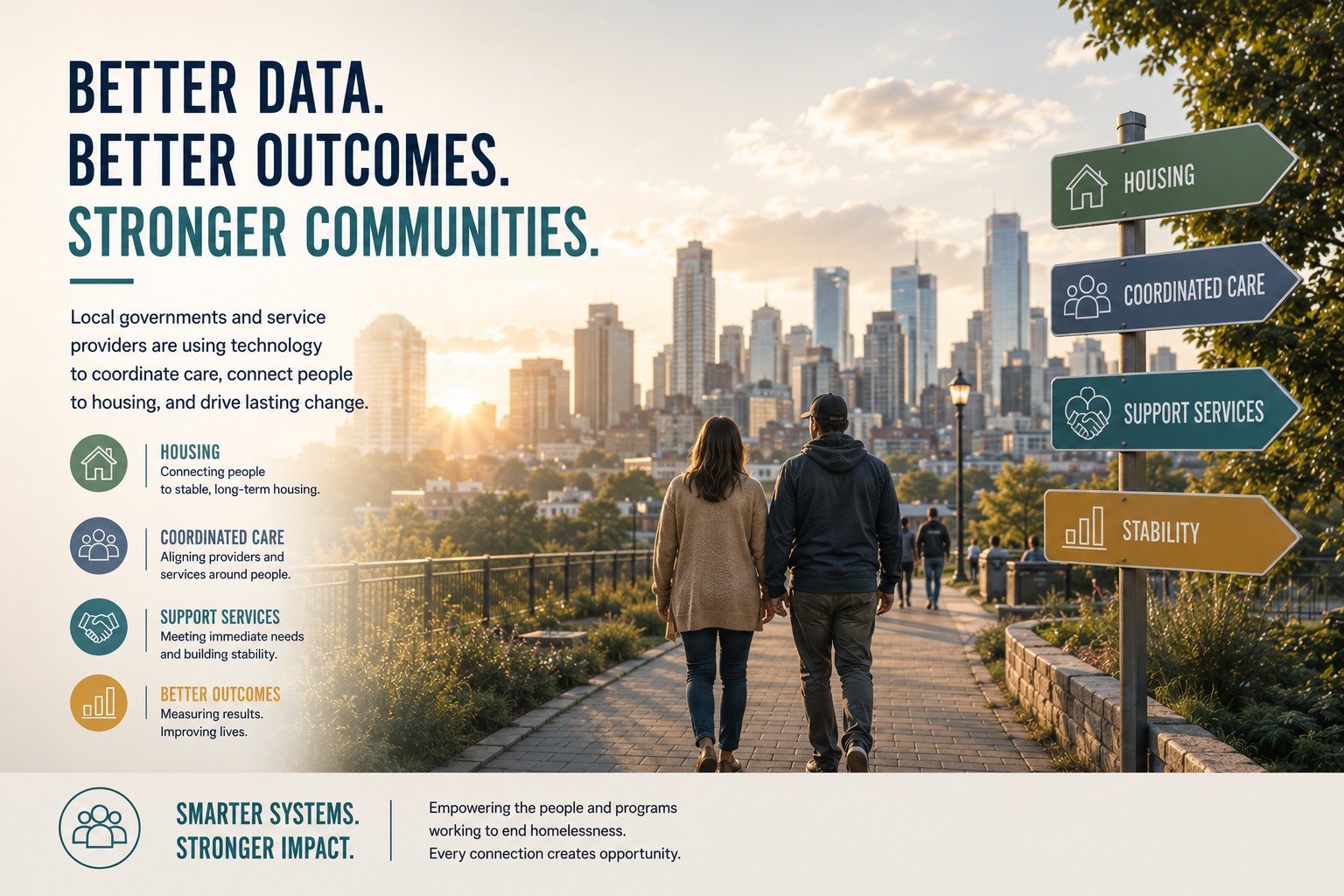
HUD counted 650,000 people experiencing homelessness in 2023. The technology local governments are buying to respond is invisible to most civic mailing lists.
In January 2023, the U.S. Department of Housing and Urban Development conducted its annual Point-in-Time count of people experiencing homelessness in the United States. The number was 653,100. That was the highest count since HUD began tracking in 2007. Forty-eight states saw homelessness increase from the prior year. The number represented a 12 percent jump from 2022.
These are not numbers that local governments can ignore. When more than 650,000 people are sleeping unsheltered or in emergency shelters on a single night, the communities where they live are under enormous political, humanitarian, and operational pressure to respond. City councils are holding emergency sessions. Mayors are declaring homelessness crises. County supervisors are approving emergency funding packages. And the organizations on the ground delivering services -- Continuums of Care, homeless services agencies, housing navigation programs, and the government departments that fund and oversee all of them -- are buying technology at a pace and scale that most civic mailing lists have never been configured to reach.
The homelessness crisis technology market is worth hundreds of millions of dollars annually and is growing. Coordinated entry systems that manage how people experiencing homelessness are assessed and connected to housing and services. HMIS platforms -- the Homeless Management Information Systems that HUD requires every Continuum of Care to use for tracking services and outcomes. Housing navigation technology that helps case managers identify, apply for, and secure housing placements for clients. The data infrastructure that aggregates outcomes data across service providers for federal reporting. These are real purchasing categories with real budgets. And the people spending those budgets have titles that most civic mailing lists have never included as distinct, searchable contacts.
Why the Homelessness Crisis Has Become a Technology Purchasing Emergency
The federal government requires significant technology infrastructure as a condition of receiving homelessness funding. Every Continuum of Care -- the regional planning bodies that coordinate homeless services across geographic areas -- must maintain a Homeless Management Information System that tracks clients, services, and outcomes in a standardized format. HUD uses this data to evaluate CoC performance, determine funding allocations, and report to Congress on the state of homelessness nationally.
For local governments and CoCs, meeting these data requirements is not optional. A CoC that cannot demonstrate compliance with HUD's HMIS standards risks losing the federal funding that sustains its service network. The technology purchasing this creates is compliance-driven, ongoing, and tied to funding timelines that have nothing to do with standard local government IT procurement cycles.
The scale of federal homelessness funding makes the compliance stakes significant. HUD distributed approximately $3.6 billion in homeless assistance grants in fiscal year 2024 through the CoC program and the Emergency Solutions Grant program. Communities that manage their HMIS data well and demonstrate strong outcomes in their federal reporting are positioned to receive favorable funding allocations. Communities that struggle with data quality, compliance, and outcome documentation are at risk of losing funding in competitive grant cycles.
The state and local funding layer adds to the purchasing urgency. Many states have created their own homelessness initiatives with technology requirements that go beyond federal HMIS standards. California, New York, Washington, and several other high-homelessness states have allocated hundreds of millions of dollars in state funding for homelessness programs, often with their own data and accountability requirements that CoCs and local government agencies must satisfy. The multi-layered compliance environment creates purchasing urgency for technology that can manage federal and state reporting requirements simultaneously. This is the same multi-layer compliance dynamic that Civic Data's research on the cybersecurity mandate wave documented in government cybersecurity -- in both cases, federal mandates layered with state requirements create purchasing urgency that is more intense than either level of government would create alone.
The Buyer Map That Most Civic Mailing Lists Cannot See
Continuum of Care Coordinators
The CoC Coordinator is the administrative leader of the Continuum of Care -- the regional body responsible for coordinating homeless services, managing the HMIS, and submitting the federal funding applications that sustain the service network. This contact is the primary purchasing authority for HMIS platforms, coordinated entry systems, and the data management tools that make federal compliance achievable. CoC Coordinators are not municipal government employees in the traditional sense -- many work for nonprofit lead agencies or regional planning bodies that receive government funding but are not government departments. Most civic mailing lists and government contact databases do not include CoC Coordinators as a distinct contact category, which means that outreach for the most important homeless services technology purchasing contact in any community is going to the wrong address.
Homeless Services Directors at City and County Government
At the city and county level, the Homeless Services Director or Director of Housing and Homelessness is the government official responsible for the local government's investment in homelessness response. This contact controls government funding for homeless services, evaluates the programs and technology that receive that funding, and often serves as the government liaison to the CoC. At larger cities, this is a senior-level position with a significant budget and direct purchasing authority for the technology platforms that support government-funded homelessness response. Most civic mailing lists include Housing Directors and Community Development Directors, but Homeless Services Director as a distinct title with distinct purchasing authority for homelessness-specific technology is a contact category that most government email databases have not separated from general housing and community development contacts.
Housing Navigation Program Managers
Housing navigation is the specific service function responsible for helping people experiencing homelessness find and secure housing placements. Housing Navigation Program Managers evaluate and purchase the technology that supports this function -- housing database tools that track available units, landlord engagement platforms that manage the relationships with property owners willing to rent to formerly homeless tenants, and the case management systems that track client progress from street to stable housing. These contacts are often employed by nonprofit service agencies rather than government departments, but they are making purchasing decisions with government funding and under government compliance requirements. Most civic mailing lists do not reach them at all.
Local Government CFOs and Budget Officers at High-Homelessness Cities
At cities where homelessness has become a financial as well as a humanitarian emergency -- Los Angeles has spent more than $1 billion annually on homelessness response, San Francisco's homelessness budget has exceeded $600 million per year -- the CFO and Budget Officer are deeply involved in the oversight and accountability requirements attached to homelessness spending. These contacts are purchasing or co-purchasing the data infrastructure and outcome analytics tools that help cities demonstrate that homelessness spending is producing results. The political pressure to show measurable outcomes from enormous homelessness budgets has made the CFO a technology purchasing stakeholder at high-spending cities in ways that have no precedent in the homelessness services field.
Which Technology Categories Are in the Most Active Evaluation
Homeless Management Information Systems are the baseline technology requirement for every CoC and every local government that receives federal homelessness funding. The HMIS market is active with both initial implementations and replacements of legacy systems that cannot meet current HUD data quality standards or that lack the reporting capabilities required for the new performance metrics HUD introduced in recent grant cycles. CoC Coordinators and Homeless Services Directors are the primary buyers, and the purchasing process is driven by federal grant cycle timelines rather than standard IT procurement calendars.
Coordinated entry systems manage the process by which people experiencing homelessness are assessed, prioritized, and connected to housing and services based on their level of need. A well-functioning coordinated entry system ensures that the people with the greatest needs access the most intensive services rather than simply the people who happen to be first in line. CoC Coordinators and Housing Navigation Program Managers are the primary buyers for coordinated entry technology, and the purchasing urgency is driven by HUD's requirement that all CoCs operate a coordinated entry system as a condition of funding.
Housing database and landlord engagement platforms are a growing priority as housing navigation has become the primary focus of federal homelessness strategy. The Housing First approach -- which prioritizes getting people into stable housing before addressing other needs like mental health treatment and substance use -- requires a robust inventory of housing options and the landlord relationships that make those options accessible. Technology that tracks available units, manages landlord incentive programs, and supports the application process for housing placements is in active evaluation at housing navigation programs across the country. This housing access technology connects to what K12 Data's research on family engagement and community partnership technology in school districts has documented -- in both markets, the technology that connects services to the people who need them across organizational boundaries is more valuable than any single-organization tool, and the buyers are administrators who manage partnerships rather than direct service providers.
Outcome analytics and performance reporting platforms are a purchasing priority driven by the political and financial accountability pressure attached to large homelessness spending. Cities that are spending hundreds of millions of dollars annually on homelessness response are under intense pressure to demonstrate that the spending is producing measurable reductions in homelessness rather than simply sustaining a service system. The analytics platforms that track housing placement rates, length of time from street to housing, return-to-homelessness rates, and cost-per-outcome metrics are purchased by the combination of CoC Coordinators, Homeless Services Directors, and city CFOs who are collectively accountable for the outcomes. The outcome accountability dynamic mirrors what Civic Data's research on the property tax revenue cliff and municipal CFO financial analytics purchasing documented -- in both cases, financial pressure has elevated the CFO into purchasing processes that were previously managed by program staff, creating a cross-functional buying committee that standard civic mailing lists are not configured to reach.
How to Build Civic Mailing Lists That Reach the Homelessness Technology Market
- Add CoC Coordinator as a primary contact category in government mailing lists. This is the most important purchasing contact in the homelessness technology market and the one most completely absent from standard civic contact databases. CoC Coordinators are not always government employees, but they manage government funding and make purchasing decisions under government compliance requirements. Civic mailing lists that include them are reaching a tier that most government email databases have never mapped.
- Include Homeless Services Director as a distinct contact category separate from general Housing Director contacts. The Homeless Services Director or Director of Housing and Homelessness at city and county governments has purchasing authority specifically for homelessness technology that is distinct from general housing and community development purchasing. Government mailing lists that separate this contact from general housing contacts are delivering targeting precision that most civic databases do not provide.
- Map Housing Navigation Program Managers at nonprofit service agencies alongside government contacts. Much of the homelessness technology purchasing happens at nonprofit agencies that receive government funding and operate under government compliance requirements. Civic mailing lists that include nonprofit homelessness service agencies alongside government department contacts are reaching the full purchasing ecosystem rather than just the government layer of it.
- Segment by CoC size and federal funding level. The CoCs receiving the most HUD funding are managing the most technology purchasing and have the most compliance urgency. HUD's CoC funding data is publicly available and creates a clear targeting hierarchy for homelessness technology vendors -- the highest-funded CoCs are the highest-urgency purchasing contacts.
- Track HUD grant cycle timelines as purchasing triggers. HUD's CoC grant competition has a specific annual timeline that creates predictable purchasing windows. CoCs preparing their annual competitive grant applications need their HMIS data and performance metrics in order, which drives technology evaluation and purchasing in the months before application deadlines. Civic mailing lists that incorporate HUD grant calendar data are identifying when CoC Coordinators and Homeless Services Directors are in their highest purchasing urgency window.
The Cross-Sector Picture
Homelessness intersects with education in ways that most vendors have not mapped as a cross-sector opportunity. The McKinney-Vento Act requires school districts to identify and support homeless students, and the technology that helps districts track, enroll, and support students experiencing homelessness is a purchasing category that connects school mailing lists from K12 Data to the civic mailing lists from Civic Data. Districts with high rates of student homelessness are purchasing student support technology alongside the CoCs in their communities that are managing the housing crisis those students' families are experiencing.
The healthcare dimension of homelessness is significant. People experiencing homelessness have dramatically higher rates of chronic illness, behavioral health conditions, and substance use disorders than the general population, and the healthcare organizations that serve them -- FQHCs, community mental health centers, and the safety net hospitals that provide disproportionate share of uncompensated care -- are purchasing technology that connects healthcare delivery to homelessness services. Physician Data's research on rural hospital closures and FQHC purchasing is directly relevant -- in many rural and urban markets, the same FQHCs that are absorbing patients from hospital closures are also the primary healthcare providers for people experiencing homelessness, creating a unified purchasing conversation for technology that spans both challenges.
The higher education connection to homelessness has grown significantly. Student homelessness -- the number of college students who lack stable housing, particularly at community colleges -- has been documented at alarming rates, and the campus services departments and basic needs coordinators at institutions covered by college mailing lists from College Data are purchasing student housing navigation technology alongside the CoCs and homeless services agencies in their communities.
Conclusion
The homelessness crisis is not going away. The 2023 HUD count of 653,100 people experiencing homelessness was the highest on record, and the forces driving homelessness -- housing costs, mental health care gaps, economic instability, and the inadequacy of the shelter system -- have not improved enough to reverse the trend.
The technology that local governments, CoCs, and homeless services agencies are buying to respond is real, it is growing, and it is worth hundreds of millions of dollars annually. But the buyers -- CoC Coordinators, Homeless Services Directors, Housing Navigation Program Managers, and the city CFOs who have been pulled into accountability conversations about massive homelessness budgets -- are almost entirely absent from standard civic mailing lists and government contact databases.
The vendors who build government mailing lists that include these contacts as distinct, high-priority purchasing tiers are entering a technology market that their competitors have literally never seen. That is a competitive advantage that does not come along often.
K12 Data -- Build a List | Pricing | Blog College Data -- Build a List | Pricing | Blog Physician Data -- Build a List | Blog Civic Data -- Build a List | Blog