
Homelessness Services Technology Has Become One of the Most Active and Most Underserved GovTech Purchasing Categories in the Country

 Federal Agencies
  0
0
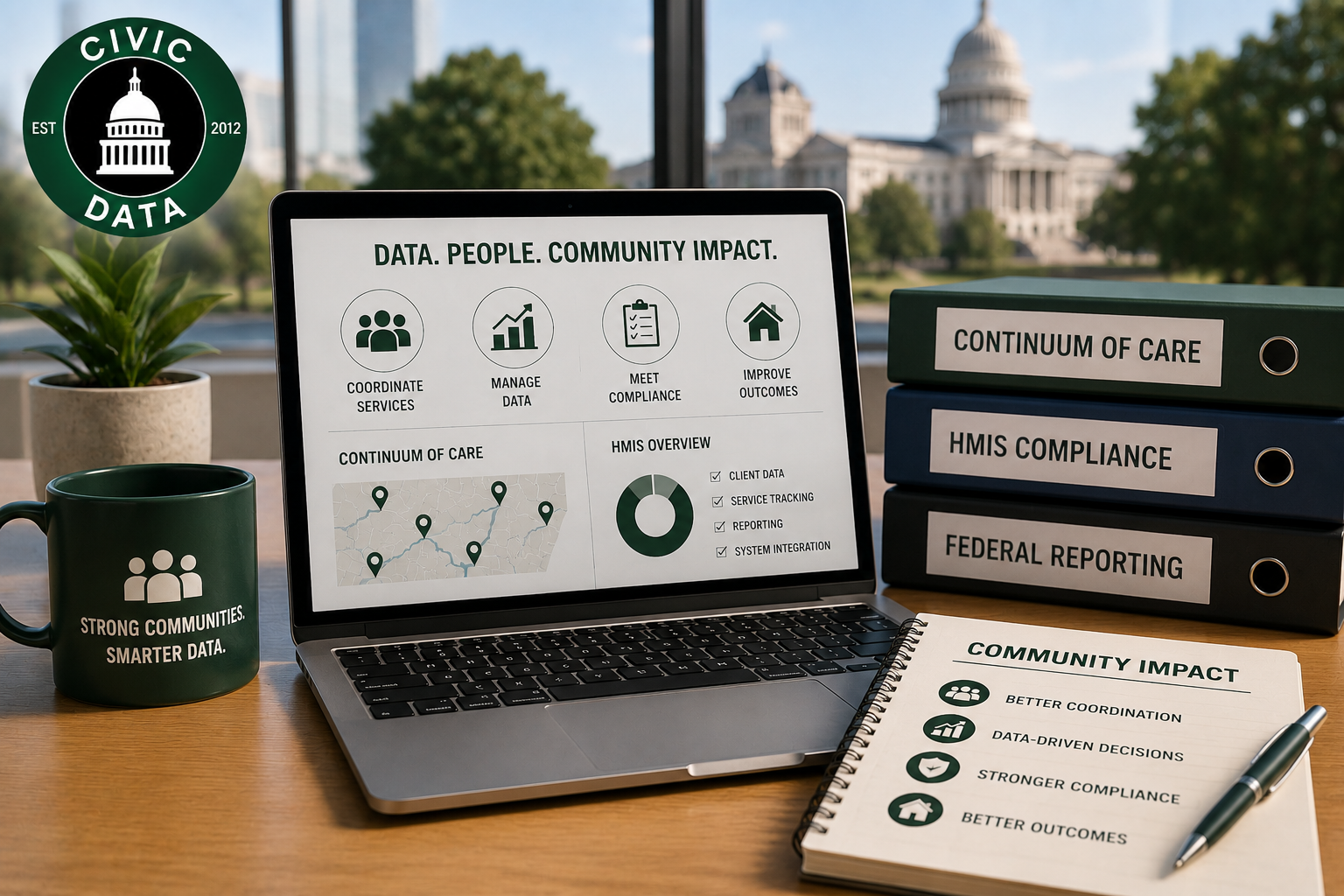
The federal Continuum of Care program funds homelessness services across 400-plus communities. CoC Coordinators and HMIS Administrators are among the most active technology buyers in local government -- and almost entirely absent from standard civic mailing lists.
Homelessness Services Technology Has Become One of the Most Active and Most Underserved GovTech Purchasing Categories in the Country
Government technology vendor conversations almost never start with homelessness services. The category does not show up on most GovTech priority lists. It is not mentioned in the infrastructure spending analysis, the election cycle purchasing research, or the state agency funding discussions that dominate public sector vendor strategy. And yet, for vendors who have actually looked closely at the purchasing activity happening through the federal Continuum of Care program and its 400-plus local community networks, it is one of the most active and most underserved technology purchasing categories in all of local government.
The Continuum of Care program is the federal government's primary funding mechanism for local homelessness services -- a competitive grant program administered by HUD that funds a network of nonprofit providers, local government agencies, and the coordinating infrastructure needed to manage them at the community level. The funding flows through local Continuum of Care Coordinators who manage a portfolio of funded service providers, a Homeless Management Information System that tracks client outcomes across all those providers, and compliance reporting obligations that have grown significantly in complexity under recent HUD administrative and performance standards changes. The people managing this system are among the most active technology buyers in local government -- and they are almost entirely absent from the standard civic mailing lists and government contact databases most GovTech vendors rely on.
How the Continuum of Care System Works
Understanding why this purchasing category has been underserved requires understanding the specific structure of the CoC funding system, because the contact tier doing the purchasing is embedded in that structure in a way that is invisible to outreach strategies built around more conventional government purchasing channels.
HUD funds more than 400 Continuum of Care programs across the country -- one per major geographic community, ranging from large urban CoCs serving tens of thousands of people experiencing homelessness to rural and suburban CoCs serving much smaller populations across a large geographic area. Each CoC has a designated Lead Agency or CoC Coordinator responsible for managing the competitive grant application process, distributing funding across the network of service providers, collecting and reporting client outcome data through the HMIS, and ensuring that funded programs meet the performance standards HUD has established.
The HMIS -- Homeless Management Information System -- is the data infrastructure that makes the whole system work. Federal law requires that all federally funded homelessness programs collect client data in an HMIS-compliant format, which means every shelter, housing program, outreach team, and service provider in the CoC network is contributing data to a shared database managed by the CoC Coordinator. That HMIS database is, by a meaningful margin, the most sophisticated shared data infrastructure that most local government homelessness service systems have ever managed -- and keeping it functional, secure, and compliant with increasingly specific HUD data standards is a technology purchasing responsibility that falls primarily on the CoC Coordinator and the HMIS Administrator.
Why HUD's Performance Standards Have Accelerated Technology Purchasing
Recent changes to HUD's CoC program performance standards have significantly increased the data quality, outcome measurement, and system performance requirements that CoC Coordinators must demonstrate to remain competitive in the annual CoC grant competition. HUD now expects CoC programs to demonstrate measurable progress on specific housing placement and shelter diversion outcomes, tracked at the individual client level, with data quality standards that require the HMIS infrastructure to capture specific data elements with high completeness and accuracy rates.
These performance standard changes have created immediate technology purchasing urgency in communities where the existing HMIS infrastructure is not capable of meeting the new data quality requirements, and where the reporting and analytics tools needed to demonstrate CoC program performance to HUD are not integrated with the operational software that service providers use to manage client cases. The gap between the technology CoC programs currently have and the technology they need to remain competitive for federal funding is a genuine and urgent vendor opportunity.
The grant compliance urgency pattern here is directly parallel to the federal programs purchasing dynamic documented in K12 Data's research on Title I Coordinators and the federal fiscal calendar. In both cases, federal grant compliance requirements create technology purchasing urgency on a calendar set by HUD or Department of Education administrative decisions rather than the standard local government budget cycle -- and vendors who understand the specific compliance requirements driving that urgency are reaching buyers at peak motivation rather than arriving before or after the window that actually matters.
The Contact Tier Most Civic Mailing Lists Are Missing
Continuum of Care Coordinators and CoC Program Managers
The CoC Coordinator is the central administrative contact for homelessness services technology purchasing at the community level. This role manages the annual HUD grant application, oversees the HMIS data collection and reporting infrastructure, coordinates the network of funded service providers, and chairs the governance board that makes collective community decisions about CoC program priorities and resource allocation. The CoC Coordinator holds direct purchasing authority for HMIS-related technology and significant influence over the technology adopted by all funded service providers in the network. Most civic mailing lists and government contact databases have no systematic coverage of this role because it is frequently housed at a nonprofit lead agency rather than directly within a city or county government, which means standard government contact research methodologies that focus on government employee directories miss it entirely.
HMIS Administrators and Data Quality Managers
The HMIS Administrator is the technical contact responsible for managing the HMIS platform, training service provider staff, monitoring data quality, and producing the HUD-required reports that demonstrate CoC program performance. This is a dedicated technology management role with direct purchasing authority for HMIS platform contracts, training and implementation services, and the reporting and analytics tools layered on top of the core HMIS. HMIS Administrators are technology buyers by job function and yet they are almost entirely absent from government technology contact databases because the role is not systematically recognized as a government technology purchasing contact in the way that city IT directors and government CIOs are.
Homeless Services Division Directors at City and County Governments
In many communities, the government partner to the nonprofit CoC lead agency is a city or county Homeless Services Division Director or Office of Housing and Homelessness director who manages the government's contribution to CoC funding, coordinates city and county-funded programs with the broader CoC network, and participates in HMIS governance and compliance reporting. This contact tier exists within conventional government structures but is so specific to homelessness services as a policy area that it is rarely captured in standard civic mailing list construction.
The cross-sector connections to this purchasing tier are real and worth mapping explicitly. Healthcare FQHCs and community health centers -- documented in Physician Data's research on the rural hospital closure clinical technology vacuum -- are frequently CoC-funded service providers or formal partners, because housing instability and healthcare access are deeply intertwined for the populations CoC programs serve. School districts -- reached through K12 Data -- are mandated reporters of student homelessness under the McKinney-Vento Act and frequently coordinate directly with CoC programs on family homelessness services. And community colleges -- reached through College Data -- are increasingly active participants in the workforce and credential pathways that support housing stability for CoC program participants. The vendor serving homelessness services technology is, in many communities, operating at the intersection of all three other sectors simultaneously.
Building Civic Mailing Lists That Reach This Category
- Add CoC Coordinator, HMIS Administrator, and Homeless Services Division Director as distinct contact categories in your government mailing list, built specifically from the HUD CoC program directory and local government housing and homeless services office listings rather than from standard government employee directories.
- Segment by CoC funding level and HUD performance rating. Larger CoC programs with higher HUD grant allocations have more developed HMIS infrastructure and more purchasing authority. CoC programs with recent HUD performance flags have the most urgent need for technology upgrades that address specific data quality or outcome measurement gaps.
- Map the nonprofit lead agency contacts alongside the government partner contacts, since the CoC Coordinator is frequently employed by a nonprofit rather than directly by a city or county government, and reaching only the government side of this purchasing conversation is reaching half of the decision-making structure.
- Track HUD CoC Notice of Funding Availability release cycles, since the competitive grant application process creates a specific annual planning and technology evaluation window that is highly predictable and that vendors who understand the CoC funding calendar can position around in advance.
Conclusion
Homelessness services technology is not a niche GovTech category. It is a federally funded, compliance-driven, actively purchasing technology market operating in more than 400 communities across the country, managed by CoC Coordinators and HMIS Administrators who are among the most active technology buyers in local government and who are almost entirely invisible to the civic mailing lists and government contact databases most GovTech vendors rely on. The vendors who build contact coverage in this category -- specifically and deliberately, from the HUD program directory and government housing office listings rather than from conventional government employee databases -- are finding a purchasing market that their competitors have overlooked for years.
K12 Data -- Build a List | Pricing | Blog College Data -- Build a List | Pricing | Blog Physician Data -- Build a List | Blog Civic Data -- Build a List | Blog K12 Talent -- Post a Job | Search Jobs | Blog