
Ransomware Hit Dallas. It Hit Oakland. It Has Hit Hundreds of Cities Nobody Heard About. Now the Cybersecurity Mandate Wave Is Creating the Biggest GovTech Purchasing Window in Years -- and Most Civic Mailing Lists Cannot Find the Buyers

 State Agencies
  0
0
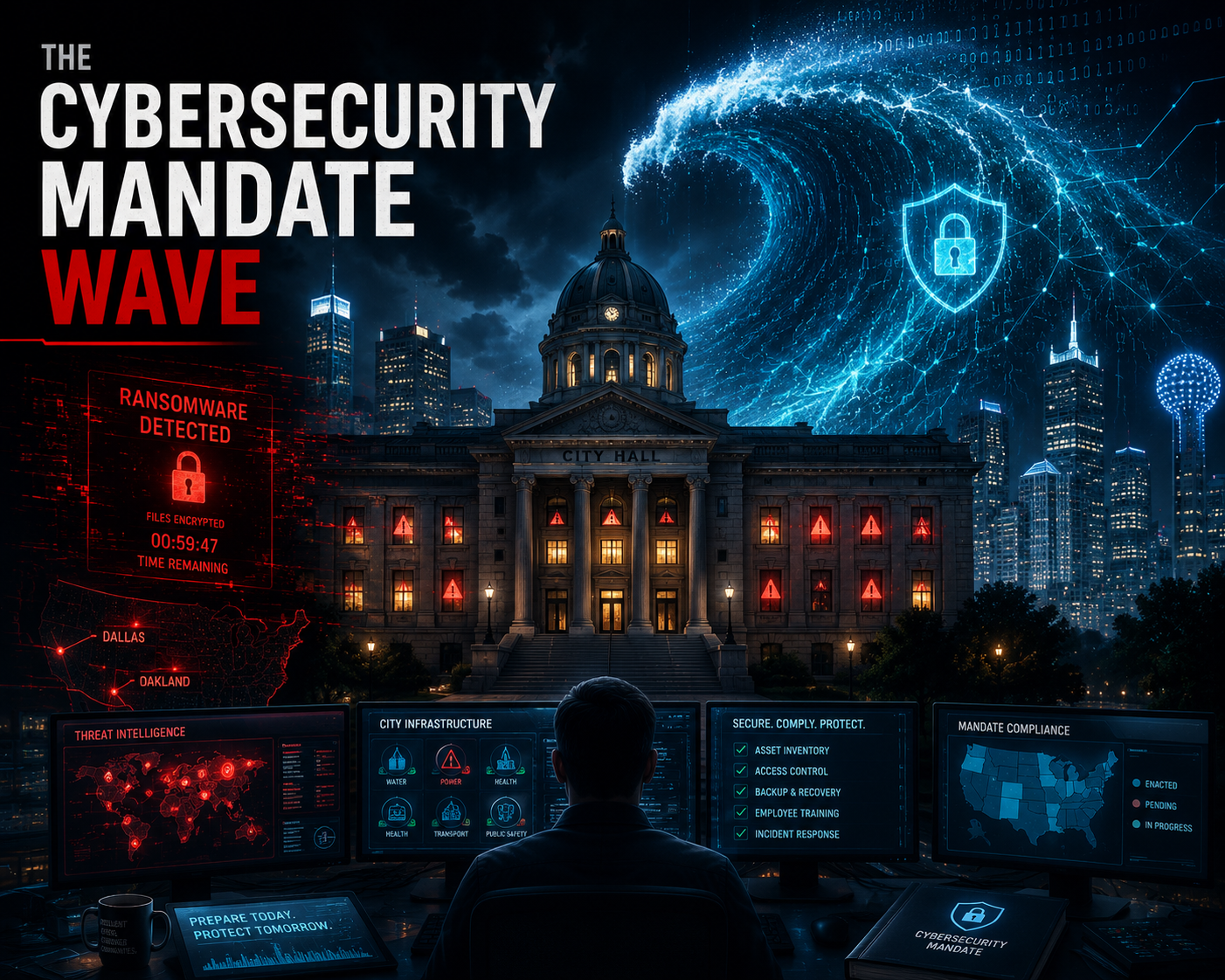
CISA mandates, 35-plus state cybersecurity laws, and $1 billion in federal grants have created urgent GovTech purchasing most civic mailing lists cannot reach.
In May 2023, the city of Dallas, Texas was hit by a ransomware attack. Court systems went offline. Police and fire department services were disrupted. The city's 311 call center could not function. It took weeks to restore normal operations, and the total cost -- including the response, the recovery, and the improvements to prevent future attacks -- reached into the tens of millions of dollars.
Oakland, California was hit in February 2023. The ransomware attack disabled city systems for weeks and ultimately exposed the personal data of thousands of city employees and residents. Schools in Clark County, Nevada. The city of Columbus, Ohio. The Colonial Pipeline attack, though not a municipal government target, demonstrated what happens when critical infrastructure controlled by organizations with inadequate cybersecurity is taken offline.
These are the attacks that made headlines. The attacks that did not make headlines number in the hundreds. The Cybersecurity and Infrastructure Security Agency tracked more than 800 ransomware attacks on government entities in 2023 and 2024. State and local governments -- which handle enormous amounts of sensitive personal data and run critical services that residents depend on -- have become the preferred targets for cybercriminals because they have historically underinvested in cybersecurity relative to the value of what they protect.
The federal government noticed. Congress passed the State and Local Cybersecurity Improvement Act, which created the $1 billion State and Local Cybersecurity Grant Program administered through CISA and FEMA. More than 35 states have passed their own cybersecurity legislation, creating state-level mandates that flow down to counties and municipalities. CISA has published cybersecurity performance goals that serve as a baseline standard for what constitutes adequate cybersecurity practice at government entities of every size.
The result is the biggest wave of government cybersecurity purchasing in years. Security platform vendors, endpoint protection companies, incident response firms, and cybersecurity training providers are all seeing demand from state and local government that is unlike anything the government technology market has seen before. The problem is that most civic mailing lists and government contact databases were not built to find the people spending this money.
Where the Money Is Coming From and Where It Is Going
The State and Local Cybersecurity Grant Program has distributed more than $800 million to states, territories, and tribal governments since 2022, with additional tranches planned through 2025. The money flows from the federal government to state agencies, which then distribute it to local governments based on cybersecurity plans that CISA reviews and approves.
This funding structure creates a specific purchasing dynamic that most civic mailing lists are not configured to capture. The decision about which local governments receive funding is made at the state level. The decision about how that funding is spent -- which specific technologies, vendors, and services are purchased -- is made jointly by state cybersecurity officials and local government technology leaders. A vendor who understands only one side of this funding flow is missing half of the purchasing decision.
The grant compliance requirements create ongoing purchasing relationships rather than one-time transactions. Local governments that receive cybersecurity grant funding must document how they are spending it, demonstrate that their cybersecurity posture is improving according to CISA's performance goals, and report on their progress to state agencies and ultimately to CISA. The administrative technology for this compliance documentation -- grant management platforms, cybersecurity posture assessment tools, and the reporting infrastructure that satisfies federal oversight requirements -- is a purchasing category that most government mailing lists have not mapped. This ongoing compliance relationship is similar to the multi-year purchasing pattern documented in K12 Data's research on school safety grant compliance requirements -- in both markets, a federal grant program has created compliance obligations that generate recurring technology purchases well beyond the initial grant-funded investment.
State-level cybersecurity mandates are creating their own purchasing wave separate from the federal grant program. States including Texas, Louisiana, Connecticut, and Tennessee have passed legislation requiring state agencies and in some cases local governments to adopt specific cybersecurity standards, complete regular security assessments, report incidents within defined timeframes, and in some states, designate named cybersecurity officials. Each of these requirements generates purchasing activity for the technology and services that make compliance achievable.
The Ransomware Reality and Why It Drives Purchasing Faster Than Any Policy Mandate
Policy mandates create purchasing. Ransomware attacks create emergency purchasing. The difference in purchasing speed is significant, and vendors who understand the attack-incident purchasing dynamic can reach government buyers at their highest urgency moment.
When a government entity is hit by ransomware, the immediate response involves significant unplanned spending on incident response services, forensic analysis, system recovery, and the communications management that the public crisis requires. But the larger and more durable purchasing wave comes in the 12 to 24 months after the attack, when the entity is rebuilding its security infrastructure to prevent a recurrence.
A local government that has been hit by ransomware and recovered is not the same purchasing prospect as a government that has merely received a mandate to improve its cybersecurity. The post-attack government has had a direct experience of what inadequate cybersecurity costs -- in downtime, in public trust damage, in actual dollars. They have a political mandate from elected officials who do not want to explain another attack to angry constituents. They have insurance implications that create financial incentives to demonstrate improved security posture. And they frequently have budget approvals for security investment that would have taken years to obtain under normal circumstances.
The post-attack purchasing window typically opens within 90 days of the incident and remains active for 12 to 18 months. The purchasing urgency and decision-making speed in this window is unlike anything in normal government procurement. This is the same 90-day urgency window documented in Physician Data's research on PE physician group fracturing and the vendor evaluation window that opens when physicians re-establish practices -- in both healthcare and government, a disruptive event creates a defined window of maximum purchasing urgency that vendors who can identify and reach it early have a structural advantage over competitors who arrive after it has closed.
Who Is Actually Making the Cybersecurity Purchasing Decisions
Chief Information Security Officers
The CISO is the primary purchasing authority for cybersecurity technology and services at government entities large enough to have the role. State government CISOs, the CISOs of large counties and municipalities, and the regional CISOs who have been created in states that mandate cybersecurity leadership at certain government tiers are the top of the buying hierarchy for the most significant cybersecurity investments.
Most civic mailing lists include Chief Information Officers, who are the broader IT leadership contacts at government entities. The CISO is different. Not every government entity has one, and at those that do, the CISO has specialized cybersecurity purchasing authority that the CIO may not share. A government mailing list that conflates CISO and CIO contacts is missing the specialized purchasing authority that matters most for cybersecurity technology vendors.
State Cybersecurity Coordinators and State CISA Liaisons
The State and Local Cybersecurity Grant Program created a specific administrative role at state agencies: the person responsible for managing the grant, distributing it to local governments, reviewing their cybersecurity plans, and reporting progress to CISA. This role -- often titled State Cybersecurity Coordinator, State CISA Liaison, or Director of State Cybersecurity Programs -- is a purchasing influencer and in some cases a direct purchasing authority for the cybersecurity planning tools, assessment platforms, and compliance reporting technology that state agencies use to manage the grant program.
Most civic mailing lists and government contact databases do not have a category for State Cybersecurity Coordinator. The role did not exist before the grant program that created it. State government email databases compiled before 2022 have zero coverage of this tier, and even databases compiled after 2022 may not have added it as a distinct, searchable contact category.
Local Government IT Directors and Technology Administrators
At the county and municipal level, the IT Director or Chief Technology Officer is often the senior cybersecurity decision-maker by default, even in jurisdictions that do not have a dedicated CISO. These contacts are evaluating cybersecurity solutions with a limited staff, a limited budget, and a genuine fear of being the next Dallas or Oakland. They are actively seeking guidance from vendors who can explain complex security concepts in plain language and who understand the budget and staffing constraints that small and mid-size government IT operations face.
The purchasing timeline for these contacts is often driven by grant application deadlines and state legislative compliance dates rather than by standard technology refresh cycles. A county IT Director who has just received a CISA cybersecurity performance goal compliance deadline is in a purchasing urgency window that has nothing to do with the IT budget calendar.
Emergency Management Officials with Cybersecurity Crossover Responsibilities
The cybersecurity mandate wave has created an interesting overlap with emergency management at some government entities, particularly at the state level, where cybersecurity incidents are increasingly classified as emergency situations that trigger emergency management response protocols. State Emergency Management Directors and their counterparts at large counties who have been assigned cybersecurity incident response responsibilities alongside traditional emergency management functions are co-evaluators for the incident response services and crisis communications platforms that serve both cybersecurity events and traditional emergencies.
The Technology Categories in the Most Active Government Cybersecurity Evaluation
Zero-trust security platforms are the architecture standard that CISA has endorsed for government cybersecurity modernization. Zero trust assumes that no user or system inside or outside the network perimeter is automatically trusted, and requires continuous verification of identity and access privileges. For local governments that have historically operated with flat, perimeter-based network architectures, moving to zero trust is a significant technology investment that requires planning, implementation support, and ongoing management.
Endpoint detection and response platforms monitor every device connected to the government network for signs of compromise. For local governments with thousands of devices across multiple facilities -- police cars, courthouses, parks departments, utility systems -- endpoint monitoring at scale requires a platform investment that most small and mid-size governments have not previously made.
Multi-factor authentication implementation, while technically simple, is one of the most impactful single security improvements a government entity can make. It is also one of the most common CISA performance goal requirements. The vendors helping governments implement MFA across complex, legacy technology environments are in active evaluation at virtually every government entity that has received cybersecurity grant funding.
Cybersecurity training and awareness programs are a required component of the CISA cybersecurity performance goals and a mandated element of most state cybersecurity legislation. Every employee who uses a government computer system is a potential entry point for a ransomware attack, and the training programs that teach employees to recognize phishing attempts, use strong passwords, and respond appropriately to suspicious activity are a durable and recurring purchasing category. The training market parallel to College Data's research on workforce development and reskilling programs at higher education institutions is direct -- in both government and higher education, the organizations that invest in workforce training to manage a structural challenge are creating ongoing purchasing relationships with training vendors that repeat annually.
Incident response retainer services have become standard practice at government entities with sufficient budget to maintain them. A retainer agreement with a cybersecurity incident response firm means that when an attack happens, the government entity has a team of experts who can begin responding immediately rather than spending days finding and onboarding a response team while the ransomware spreads. The retainer market has grown significantly as government entities have absorbed the lesson from Dallas and Oakland. The connection to Physician Data's research on the prior authorization crisis is illustrative -- in both government and healthcare, the financial and operational cost of being unprepared for a predictable risk has become so clear that insurance-like preparedness investments are now standard rather than exceptional.
Building Civic Mailing Lists That Reach the Cybersecurity Purchasing Wave
- Add Chief Information Security Officer as a distinct contact category separate from Chief Information Officer. CISOs have specialized cybersecurity purchasing authority that CIOs may not share, and conflating the two contacts produces outreach that reaches the wrong person for the highest-value cybersecurity technology decisions.
- Include State Cybersecurity Coordinators and State CISA Liaisons as named contacts in state government email databases. These roles were created by the cybersecurity grant program and they did not exist before it. Government mailing lists compiled before 2022 have no coverage of this tier, and those compiled after 2022 may not have added it as a distinct category.
- Track ransomware attack events as real-time purchasing triggers. The 12 to 18 months following a ransomware attack are the highest-urgency purchasing window for cybersecurity technology and services at affected government entities. Civic mailing lists that incorporate public ransomware incident reporting as a targeting signal identify governments in active emergency purchasing mode that standard government contact databases cannot detect.
- Segment by grant status and compliance deadline. Government entities that have received CISA cybersecurity grant funding in the last 24 months are in active technology deployment and compliance documentation cycles. Those approaching compliance deadline dates mandated by state legislation are in purchasing urgency windows that outreach timed to those deadlines can reach.
- Map state cybersecurity legislation timelines as a predictive market signal. States that have passed cybersecurity legislation with specific implementation deadlines create purchasing urgency at county and municipal government levels in the 6 to 18 months before compliance is required. Civic mailing lists that track state legislative timelines are identifying future purchasing urgency before it becomes present urgency.
Why This Purchasing Wave Is Bigger Than Most Vendors Realize
The cybersecurity mandate wave in government is occurring at the same time as the AI governance mandate wave documented in Civic Data's research on the AI procurement mandate. Many state and local governments are managing both simultaneously, and in some cases the same administrator -- the State CISO or the local IT Director -- is the purchasing contact for both cybersecurity technology and AI governance technology. Vendors whose government mailing lists reach this contact tier are positioned to serve both purchasing conversations with a single outreach relationship.
The education sector connection to government cybersecurity is often overlooked. School districts are government entities, and they are subject to many of the same cybersecurity mandates, grant programs, and ransomware threats as municipal governments. The school district email lists and school mailing lists from K12 Data reach IT Directors and technology administrators at school districts who are managing cybersecurity grant compliance requirements alongside everything else on their plates. Cybersecurity vendors with both civic mailing lists and school mailing lists can reach the full government and education cybersecurity market from a unified outreach strategy.
The healthcare cybersecurity connection is equally significant. The ransomware attacks that have hit government entities have also hit hospitals and health systems at alarming rates, and many of the same technologies -- zero trust architecture, endpoint detection and response, multi-factor authentication -- are required at healthcare organizations under HIPAA and the new HHS cybersecurity guidance released in 2024. Vendors with physician mailing lists from Physician Data alongside civic mailing lists have a cross-sector cybersecurity sales opportunity that is difficult to exploit without contact data spanning both markets.
Conclusion
The ransomware attacks on Dallas, Oakland, and hundreds of less-famous cities and counties have made one thing clear: the question for local government is not whether a cybersecurity attack will happen, but when, and how prepared the government will be when it does.
The federal grant program, state legislation, and CISA performance goal framework that have emerged in response to this reality have created the biggest government cybersecurity purchasing wave in years. The vendors winning in this market are the ones whose civic mailing lists and government email lists have been updated to include CISOs, State Cybersecurity Coordinators, and local IT Directors as distinct, high-priority purchasing contacts -- and who know how to time their outreach to grant cycles, compliance deadlines, and the post-attack purchasing window that follows a ransomware incident.
The vendors still routing government cybersecurity outreach through general IT department contacts and program directors are reaching people who will forward the message, if they forward it at all. The purchasing authority for the biggest GovTech security budget in years lives somewhere else.
K12 Data -- Build a List | Pricing | Blog College Data -- Build a List | Pricing | Blog Physician Data -- Build a List | Blog Civic Data -- Build a List | Blog