
What Happened When Utah Actually Tested Ed-Tech Privacy Promises, and What Other States Should Learn From It

 State Agencies
  0
0
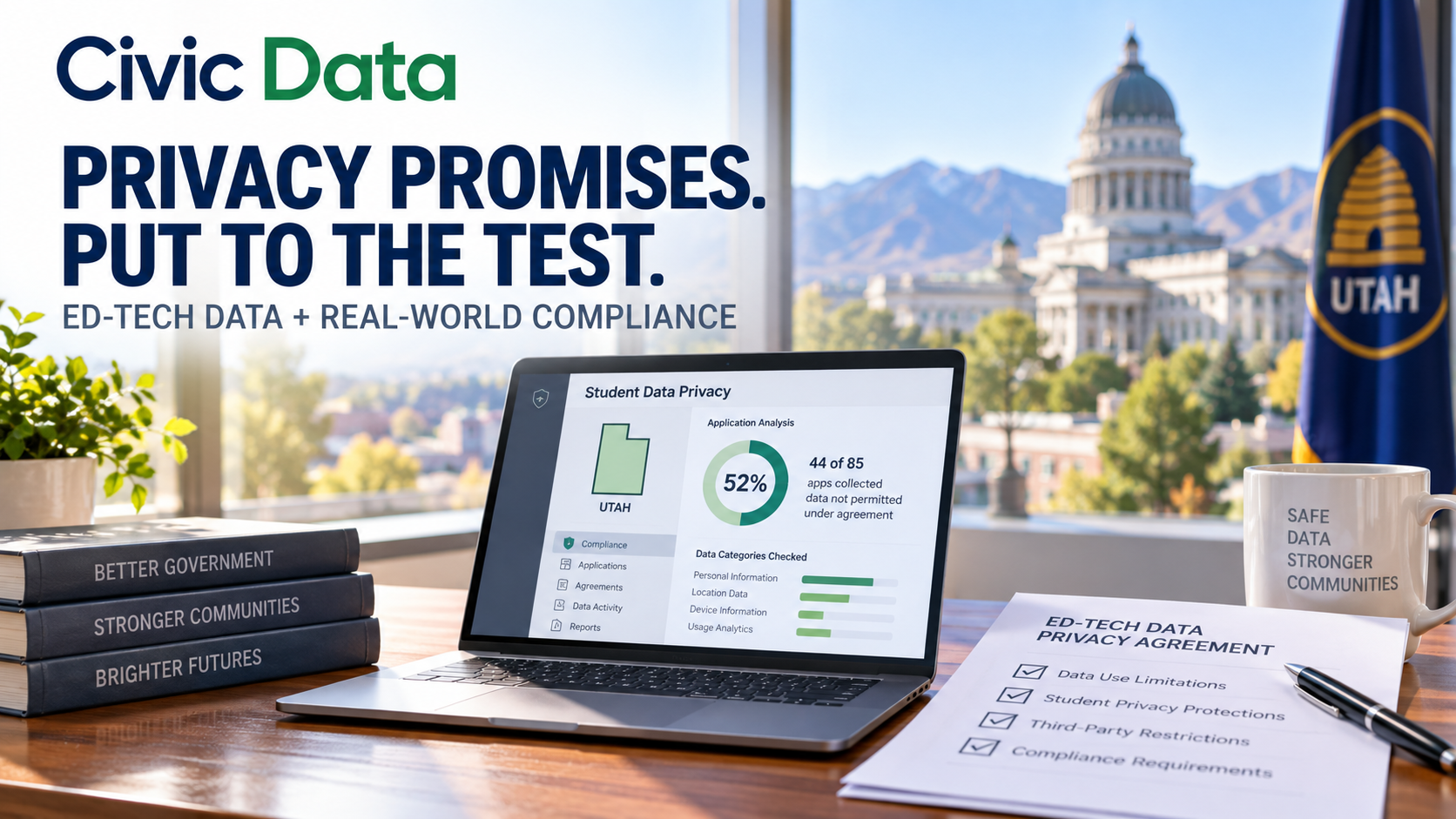
Utah moved beyond simply accepting ed-tech vendor privacy commitments and actually tested them directly, a genuinely instructive model for other states evaluating vendor claims.
What Happened When Utah Actually Tested Ed-Tech Privacy Promises, and What Other States Should Learn From It
A genuinely instructive government oversight model deserves direct attention from state technology and education policy leadership. Rather than simply accepting education technology vendor privacy commitments at face value, Utah moved to actually test these promises directly, representing a meaningfully more rigorous approach than the verification many states typically apply to vendor privacy claims. For state officials responsible for education technology procurement and oversight, this approach offers genuine, concrete insight into what real accountability can actually look like in practice.
For state chief privacy officers, education technology directors, and procurement leadership, Utah's specific approach deserves genuine, direct study, both for what it reveals about the gap between vendor commitments and actual practice, and for how other states might build comparable verification capacity themselves.
Why Testing Promises Directly Represents a Genuinely Different Approach
Many states currently rely primarily on vendor privacy policy language and contractual commitments without genuine, independent verification that actual vendor practice aligns with these stated commitments. Utah's approach of actually testing these promises directly represents a meaningfully more rigorous oversight model, one that treats vendor commitments as claims requiring genuine verification rather than assurances that can be accepted without independent confirmation.
This distinction matters considerably given how genuinely difficult it can be for schools and families to independently verify whether a specific education technology vendor's actual data practices align with its stated privacy policy, particularly for AI-enabled features where data collection and use practices may be less transparent or more difficult to observe directly than more traditional education technology functionality.
What This Testing Approach Actually Revealed
"What Happened When Utah Put Ed-Tech Privacy Promises to the Test."
States and districts should recognize that genuine, direct testing of vendor privacy claims can reveal meaningful gaps between stated commitments and actual practice that policy language review alone might not surface. This kind of direct verification represents genuinely more rigorous oversight than many states and districts currently apply, and Utah's specific experience offers a concrete, replicable model other states should study directly rather than assuming their own current, less rigorous vendor evaluation approach is adequate.
This testing-based approach also creates genuine accountability pressure on vendors themselves, since vendors aware that specific states are willing to actually verify privacy claims directly, rather than simply accepting stated commitments, face genuine incentive to ensure actual practice aligns closely with public commitments rather than treating privacy policy language as primarily a compliance formality.
What Other States Should Learn From This Approach
States without comparable verification capacity should evaluate building this kind of direct testing capability into their own education technology procurement and oversight processes, rather than continuing to rely primarily on vendor self-reporting and policy language review alone. This requires genuine, dedicated technical capacity many states may not currently have readily available, suggesting states should consider regional collaboration or shared verification resources specifically addressing this capability gap.
States should also consider building this kind of verification requirement directly into procurement contracts and ongoing vendor relationships, establishing genuine, periodic testing as a standard practice rather than a one-time initial evaluation, since vendor practices can genuinely evolve over time in ways initial procurement-stage verification alone would not necessarily catch.
Why This Matters Specifically for AI-Enabled Education Technology
This kind of rigorous, direct verification approach carries particular significance for AI-enabled education technology specifically, given how rapidly AI features have been integrated into existing education technology products and how genuinely difficult it can be to fully understand actual data collection and use practices for these newer AI capabilities through policy language review alone. States building AI-specific verification capacity, testing actual AI feature behavior directly rather than relying solely on vendor descriptions of how these features work, are positioned to provide considerably more meaningful oversight than states applying only traditional, policy-language-based review to this genuinely newer technology category.
A Concrete Scenario Worth Walking Through
Consider a state education technology office that has historically approved education technology vendors for statewide procurement lists based primarily on reviewing submitted privacy policy documentation, without independently verifying that vendors' actual product behavior matches these written commitments. This same office, adopting Utah's testing-based approach, might discover that a vendor's actual AI feature implementation collects or uses student data in ways not fully reflected in the vendor's own privacy policy language, a gap that policy review alone would likely never have surfaced without genuine, direct product testing.
This scenario illustrates precisely why direct testing matters so much practically, since vendors are not necessarily acting in deliberate bad faith when this kind of gap exists, but rather may have incompletely or imprecisely described their own product's actual behavior in policy documentation, a genuine risk that only direct testing can reliably identify and correct. States building this kind of verification capacity should recognize it as protecting both students and, ultimately, vendors themselves from the reputational and legal risk that comes from privacy policy language not accurately reflecting actual product behavior.
Frequently Asked Questions
How do states verify ed-tech vendor privacy compliance?
Most states currently rely on vendor privacy policy language and contractual commitments without independent verification. Utah's approach of actually testing vendor promises directly represents a meaningfully more rigorous model, one other states can study and adapt into their own procurement and oversight processes.
What did Utah find when it tested ed-tech privacy promises?
Direct testing revealed gaps between stated vendor commitments and actual practice that policy language review alone would likely not have surfaced, demonstrating why independent verification matters beyond simply reviewing what a vendor states in its privacy policy.
What should states look for when evaluating education technology vendors?
States should build direct testing capability into procurement and ongoing vendor relationships, established as a standard, periodic practice rather than a one-time initial evaluation, since vendor practices and AI features can evolve over time in ways initial review alone would not catch.
A Broader Pattern of Institutions Adapting to Genuine Change This Year
This dynamic, institutions building genuinely more rigorous verification and accountability mechanisms, is showing up across sectors this year. K-12 districts can find useful terminology grounding directly too, and K12 Data's glossary offers context for exactly this kind of policy adaptation. Higher education is facing a related shift too, since federal accreditation rules being rewritten are forcing institutions into evaluation decisions nobody chose voluntarily.
Healthcare is facing a related wave of institutional distress too, since physician practice bankruptcies just hit their highest level since 2019, creating a genuine new wave of buyers. And K-12 hiring reflects a related tension too, since states racing to raise starting teacher pay are inadvertently creating a veteran retention crisis.
Utah's approach of actually testing education technology vendor privacy promises, rather than simply accepting stated commitments, represents a genuinely more rigorous oversight model other states have real reason to study and adapt. States building comparable direct verification capacity, particularly addressing AI-enabled features specifically, are positioned to provide considerably more meaningful accountability than states continuing to rely primarily on vendor self-reporting and policy language review alone.
Ready to reach the state technology and privacy leaders building genuine verification capacity? Build a government marketing database, or buy a government email list, with Civic Data today.